
Please note: this guide is general information, not medical advice. Talk to a qualified healthcare professional before changing your diet or starting a fasting routine, especially fasts longer than 24 hours.
How to mix FAST LYTE for fasting.
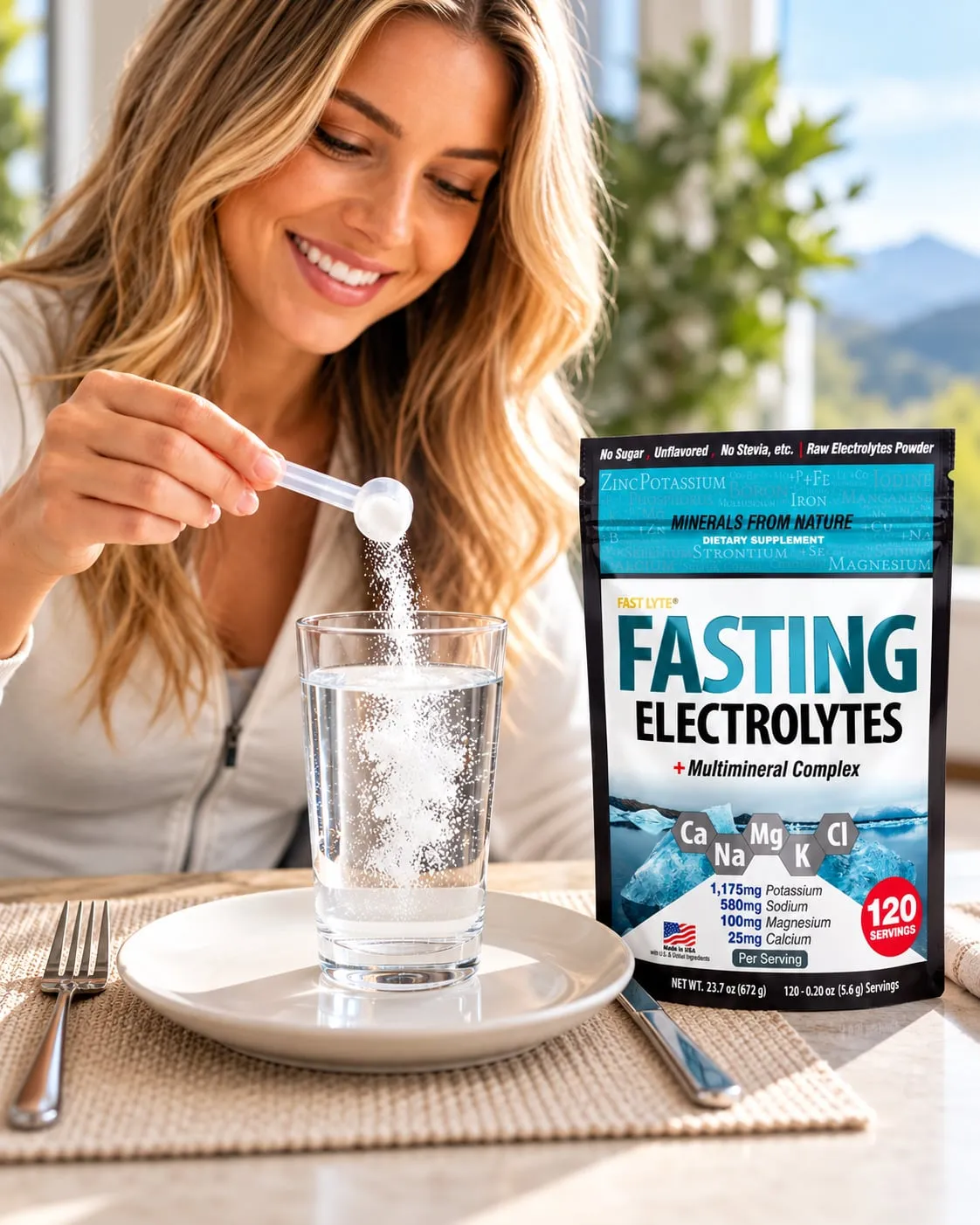
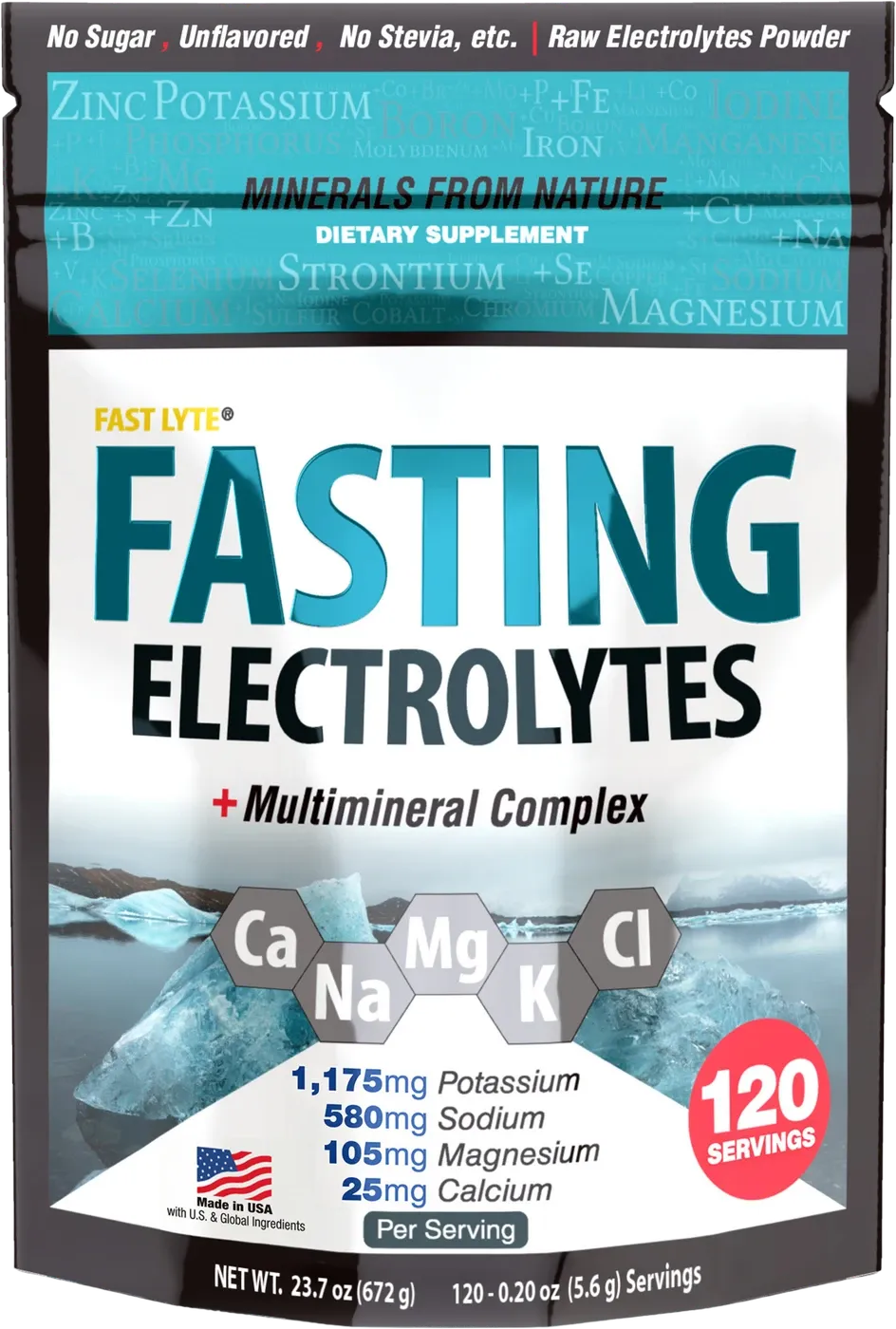
- Mix 1 scoop (5.6 g) of Fasting Electrolytes, or 1 stick pack, into 64 fl oz of water.
- Start with light support: drink 16 fl oz of the batch.
- Move up to moderate (32 fl oz) or full support (all 64 fl oz) only if you notice signs of low electrolytes, such as dizziness, tiredness or muscle cramps.
The lowest amount that works is the best amount. Needs vary from person to person, and many people find the light level is enough.
| Per amount you drink | Light 16 fl oz · Start here | Moderate 32 fl oz · If you need more | Full 64 fl oz · The whole batch |
|---|---|---|---|
| Potassium | ~294 mg | ~588 mg | 1,175 mg |
| Sodium | ~145 mg | ~290 mg | 580 mg |
| Magnesium | ~26 mg | ~53 mg | 105 mg |
| Chloride | ~378 mg | ~755 mg | 1,510 mg |
| Calcium | ~6 mg | ~13 mg | 25 mg |
From 1 scoop (5.6 g) in 64 fl oz; light and moderate values are proportional and rounded.
Tips to improve the taste
Raw electrolytes taste slightly salty, more so at higher concentrations. Some ideas:
| Strict (water-only) fast | Less strict fast or eating day |
|---|---|
| Add more water | Mix into bone broth |
| Add a squeeze of lemon | Vegetable broth |
| A splash of apple cider vinegar | Fruit- or veggie-infused water |
| Mix with herbal tea | Any low-calorie liquid, like miso soup |
Lemon, broths and infused water add a few calories, so skip them if you're keeping a strict water fast.
What happens during a fast.
During an extended water fast (no calories, only water), your body moves through stages as it switches fuel sources. Everyone is different; this is a general outline.
| Stage | Hours | What's typically happening |
|---|---|---|
| Day 1 | 0–24 | Your body uses blood sugar and stored glycogen. Glycogen is stored with water, so early scale drops are mostly water. Insulin falls, and hunger waves are common. |
| Day 2 | 24–48 | Glycogen runs low and the body shifts to burning fat and making ketones. Hunger often peaks. Sodium loss through urine speeds up. |
| Day 3 | 48–72 | The body is more adapted to using ketones. Many people report that hunger eases and thinking feels clearer. |
| Days 4–5 | 72–120 | Steady ketosis. Research on fasting suggests sodium losses are highest in roughly the first four days. |
| Days 6–7 | 120–168 | Continued ketosis. Electrolytes still need daily replacing, and it's time to plan a gentle return to eating. |
Autophagy, the body's natural process of breaking down and recycling worn-out cell parts, is often discussed with fasting. Research suggests it increases gradually the longer you fast, with sources commonly pointing to roughly 24–48 hours or more for a noticeable increase. It works more like a dimmer than an on/off switch.
Breaking a long fast: after several days without food, your digestion has slowed down. Start again with small, easy-to-digest meals. Long fasts are demanding, and not everyone should attempt one without medical guidance.
Fasting styles and goals.
People fast for different reasons, and the goal changes how long and how strictly they fast.
| Longer, strict fasts | Shorter, routine fasts | |
|---|---|---|
| Typical length | 2+ days | Daily windows like 16:8 or 18:6, alternate-day or 5:2 |
| Common focus | Deeper fasted state, cellular maintenance (autophagy) | Everyday routine, appetite and calorie management |
| Strictness | Usually water only, plus plain electrolytes; many avoid protein, milk, broth and sometimes coffee | More flexible: black coffee or unsweetened tea is common |
| How often | Occasionally | Can be part of a regular routine |
The two overlap, and many people combine them: a daily eating window most of the time, with an occasional longer fast. Decide on your goal first, and fit your fasting to your health and lifestyle.
How often people fast.
| Approach | Typical schedule | Notes |
|---|---|---|
| Intermittent fasting (e.g. 16:8) | Daily or most days | Gentle, "maintenance" fasting that fits a normal routine |
| 24- or 36-hour fasts | Weekly to a few times a month | Make sure you eat well on eating days |
| 2–3 day fasts | Monthly to a few times a year | Build up to them; electrolytes become important |
| 5–7+ day fasts | Rarely, at most a few times a year | Only for experienced, healthy people, ideally with medical supervision |
Listen to your own needs. If you usually eat a lot of carbs, ease in gradually. Physically demanding jobs often suit shorter fasts. If you're already lean, be careful with frequent long fasts. Start small, for example by skipping one meal, and build up over time. A routine you can keep up beats an extreme fast you try once.
Managing electrolytes.
Why electrolytes drop when you fast
When you stop eating, insulin falls. Low insulin signals your kidneys to release more sodium (sometimes called "fasting natriuresis"). As glycogen is used up, the water stored with it is released too, so you urinate more and lose minerals with it. Potassium and magnesium are also lost, more gradually. Plain water alone doesn't replace any of them.
Signs your electrolytes may be low
Fatigue, headache, dizziness (especially when standing up), muscle cramps and brain fog. It's easier to stay ahead of a shortfall than to fix one, so many people start electrolytes before symptoms get strong.
When to start
- Day 1: many people are fine without added electrolytes in the first 24 hours, but losses have already started. If you feel lightheaded or get a headache, add a light amount of FAST LYTE. Experienced fasters often start from day 1.
- Day 2 at the latest: sodium loss speeds up on days 2 and 3, so most extended-fasting guides recommend taking electrolytes consistently from day 2 on.
- Days 3+: keep replacing electrolytes every day, even if you feel fine.
Hydration and salt work together
Drinking lots of plain water with no electrolytes can dilute your sodium. Drink to thirst and pair your water with electrolytes. If you're drinking plenty but still feel thirsty or weak, low sodium is a common reason.
Adjust to your situation
- Coffee or tea drinkers may lose fluid a little faster and need electrolytes earlier.
- A salty meal before you start may let you go a bit longer before you need them.
- If you exercise or sweat while fasting, you lose more and may need to start on day 1.
With FAST LYTE, start at the light level and stay there as long as you feel good. Move up only if symptoms appear. Don't overdo any single mineral; balance is the goal.
Who should talk to a doctor first.
Fasting isn't right for everyone. Talk to your doctor before fasting, and before using electrolyte supplements during a fast, if you are pregnant or nursing, under 18, have diabetes or take blood-sugar or blood-pressure medication, have kidney or heart problems, have a history of eating disorders, are underweight, or take any prescription medication.
Stop fasting and get medical help if you have chest pain, an irregular or racing heartbeat, fainting, confusion or severe weakness.
Product warnings: Do not exceed recommended daily dose. Not a substitute for a varied diet. Not intended for use by persons under the age of 18. Pregnant or nursing women, children under four, individuals with kidney problems or an obstructed bowel, individuals taking medication(s) or persons who have a health condition should consult their doctor before using this product. Discontinue use and consult your doctor if any adverse reactions occur.
Further reading.
- Autophagy: Definition, Process, Fasting & Signs (Cleveland Clinic)
- How Long Do You Need to Fast for Autophagy? (MedicineNet)
- 48-Hour Fast: How-To, Benefits, and Downsides (Healthline)
- Fasting and Gut Microbiota (The Institute for Functional Medicine)
- Remodelling of the intestinal ecosystem during caloric restriction (Trends in Microbiology)
Common questions.
When should I start taking electrolytes during a fast?
Many people do fine without added electrolytes in the first 24 hours, but sodium loss speeds up on days 2 and 3, so most extended-fasting guides recommend taking electrolytes consistently by day 2. Start with a light amount, or earlier if you feel lightheaded or get a headache.
Do zero-calorie electrolytes break a fast?
Unsweetened, zero-calorie electrolytes like FAST LYTE contain no calories, sugar or sweeteners, so they are commonly used during water fasts. Flavored drinks, broths or juices do add calories.
How do I mix Fasting Electrolytes for an extended fast?
Mix 1 scoop (5.6 g) into 64 fl oz of water. Drink 16 fl oz for light support, 32 fl oz for moderate support, or the full 64 fl oz for full support, and increase only if you need to.
*These statements have not been evaluated by the Food and Drug Administration. This product is not intended to diagnose, treat, cure, or prevent any disease.